The Cost of Denial
A Pattern of Distraction, Intimidation, and Quiet Correction
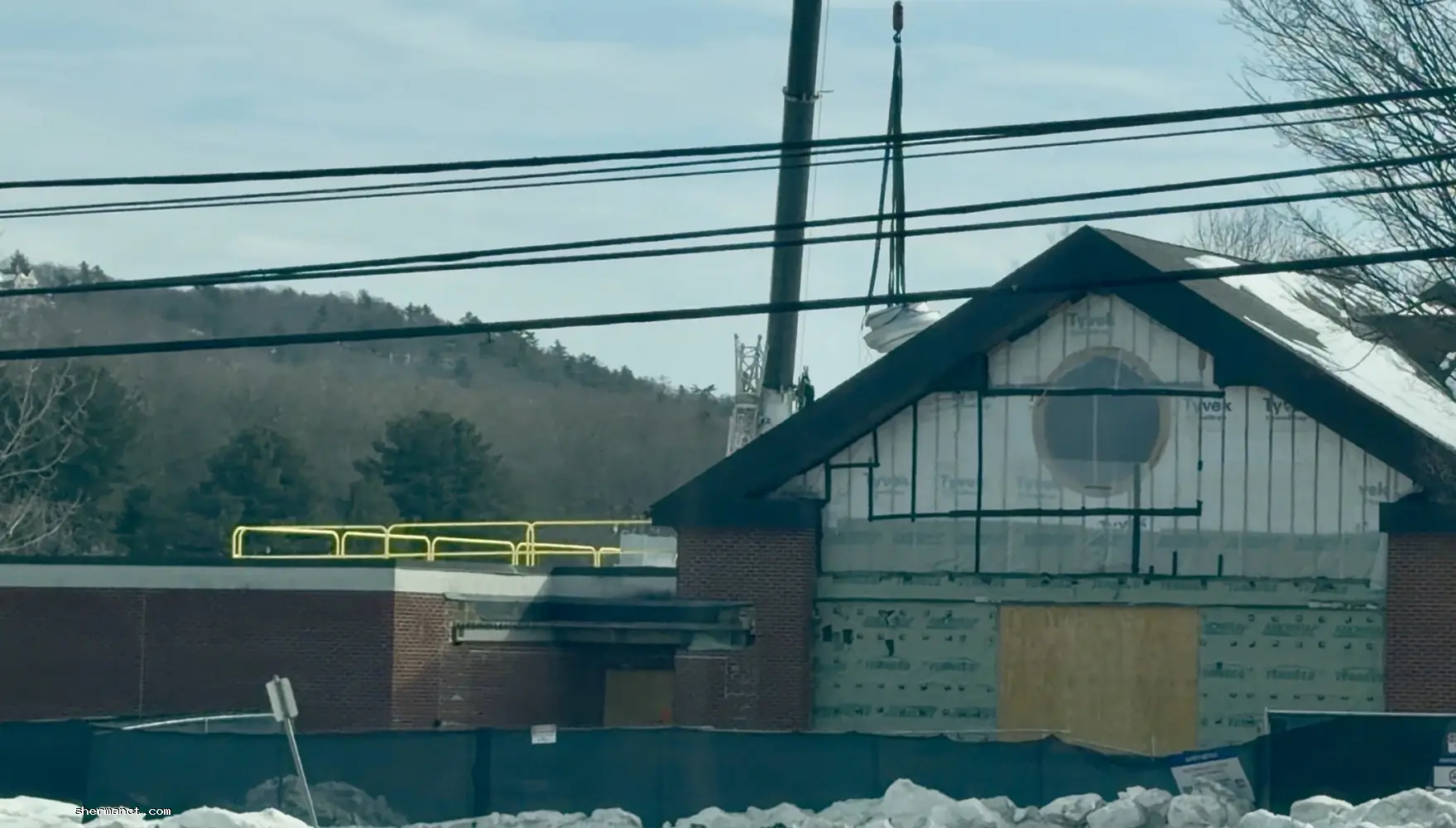
Sherman, CT , As the crane lowered equipment onto the Sherman School roof this Presidents' Day, the scene projected an image of progress. But for those observing the periphery of the construction zone, the view was less about renovation and more about damage control.
While the heavy lifting proceeded as scheduled, the administration’s behavior on the ground revealed a chaotic "panic mode." In the last 48 hours, Town Hall has scrambled to cover up safety violations they previously claimed didn't exist, all while deploying law enforcement to silence the residents who pointed them out.
The "Villainize and Fix" Strategy
This dynamic has become the defining characteristic of the school renovation project. The pattern is predictable: a resident identifies a liability, whether it be insurance risks, sloppy site preparation, or code violations. The administration’s immediate response is inaction, followed by public denial.
When video evidence makes the denial unsustainable, the tactic shifts to villainization. The whistleblower is accused of "harassment." Rumors are spread to discredit the source. Police are dispatched to sit in residential driveways, a "command presence" designed to intimidate.
The irony is that while the First Selectman cries "harassment," the Town's own professionals disagree. In a recent email regarding the code violations, the Town Official explicitly noted that contacting state officials is "in no way an escalation" and admitted that the State Inspector "will assist you quicker than they will assist me."
When a town's own official implies he is being obstructed from within, and welcomes state oversight to get the job done, it becomes clear that the "harassment" narrative is a political shield, not a legal reality.
Yet, quietly, in the background of this theatrical outrage, the Town silently corrects the very errors they claimed were fabricated. They fix the insurance liabilities. They clean up the site prep. They hope no one notices that the "villain" was right all along.
The Gray Tarp Confession
The saga of the school’s exterior floodlights offers the most recent, and most visible, example of this duplicity.
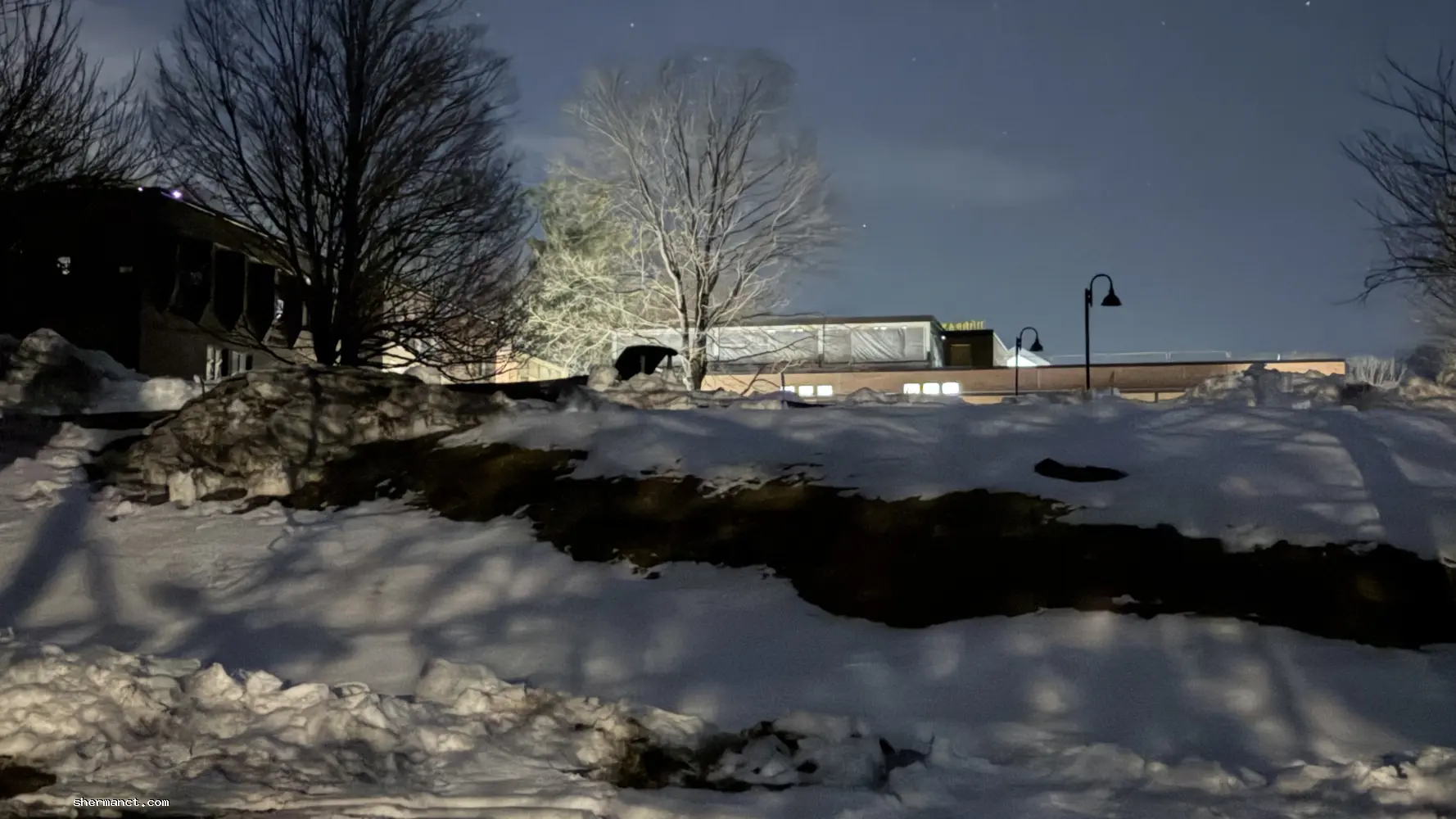
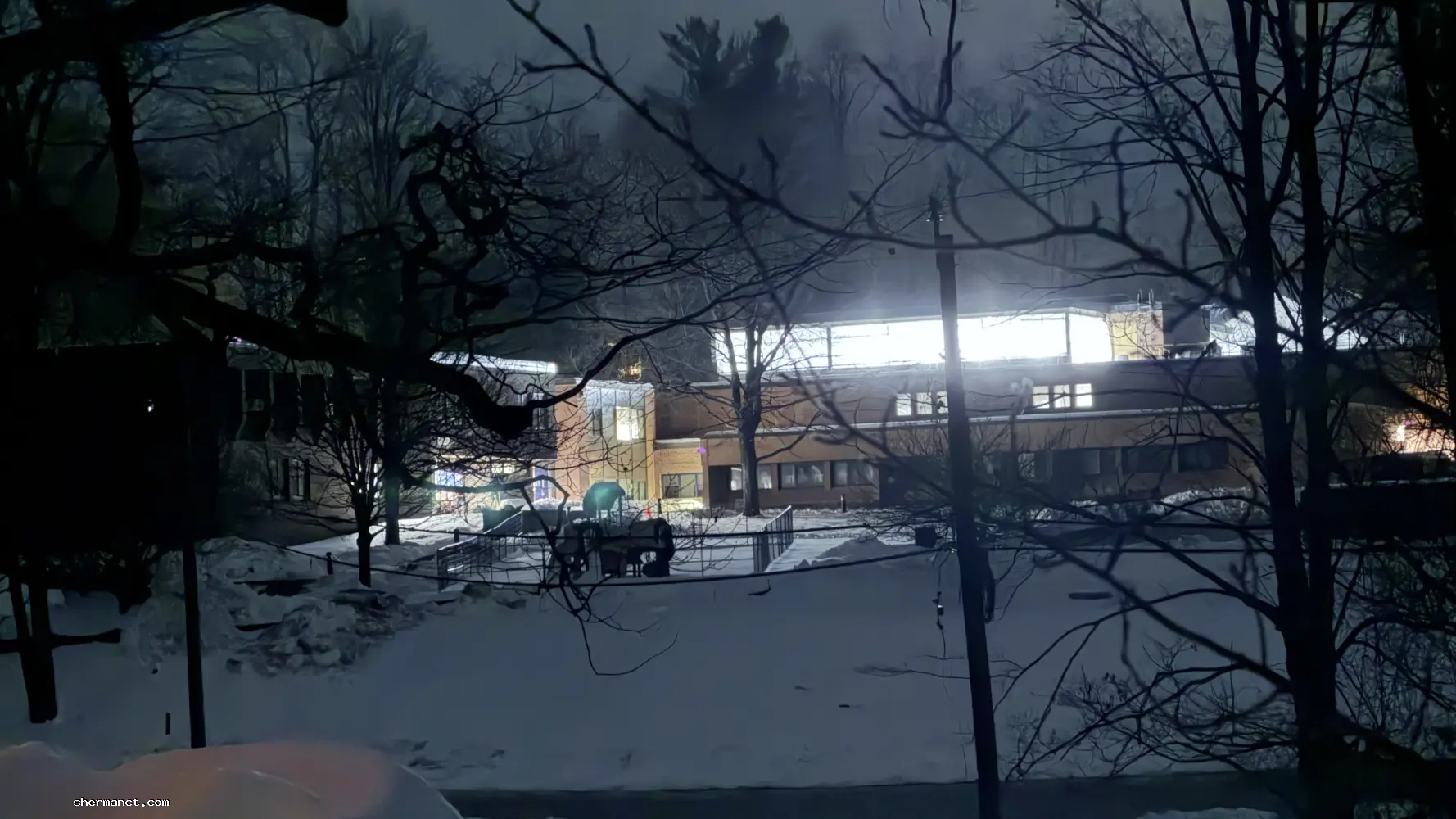
For weeks, the First Selectman’s office insisted that the blinding, unshielded lights facing Route 37 and local roadways were "compliant," "necessary for safety," and "non-negotiable." Residents who raised concerns about light trespass were dismissed as obstructionists.
Then, the timeline of events exposed the lie:
- The Standoff: As recently as Wednesday, the First Selectman personally accused residents of harassment for reporting the hazard, refusing to budge.
- The Pivot: Following a formal Notice of Liability, the tone shifted. On Sunday, crews were observed manually lowering and dimming the interior unshielded floodlights, a tacit admission that the previous brightness was indeed excessive.
- The Cover-Up: By Monday, realizing the "stealth fix" was insufficient, the administration ordered the installation of opaque tarps over the fixtures.
If the lights were safe and compliant on Friday, why cover them in gray plastic on Monday? The tarps now hanging from the school are not weatherproofing; they are a physical admission of guilt, hastily installed to erase evidence before State Inspectors arrive.
A History of Insolvency
Why is the administration so terrified of scrutiny? Why the sudden scrambling to fix errors only after being caught? The answer may lie in a leadership style that has never comfortably grasped financial or operational reality.
It is often said that it is easy to spend other people's money. But a look into federal court records reveals that First Selectman Don Lowe’s struggle with fiscal management predates his tenure in Sherman.
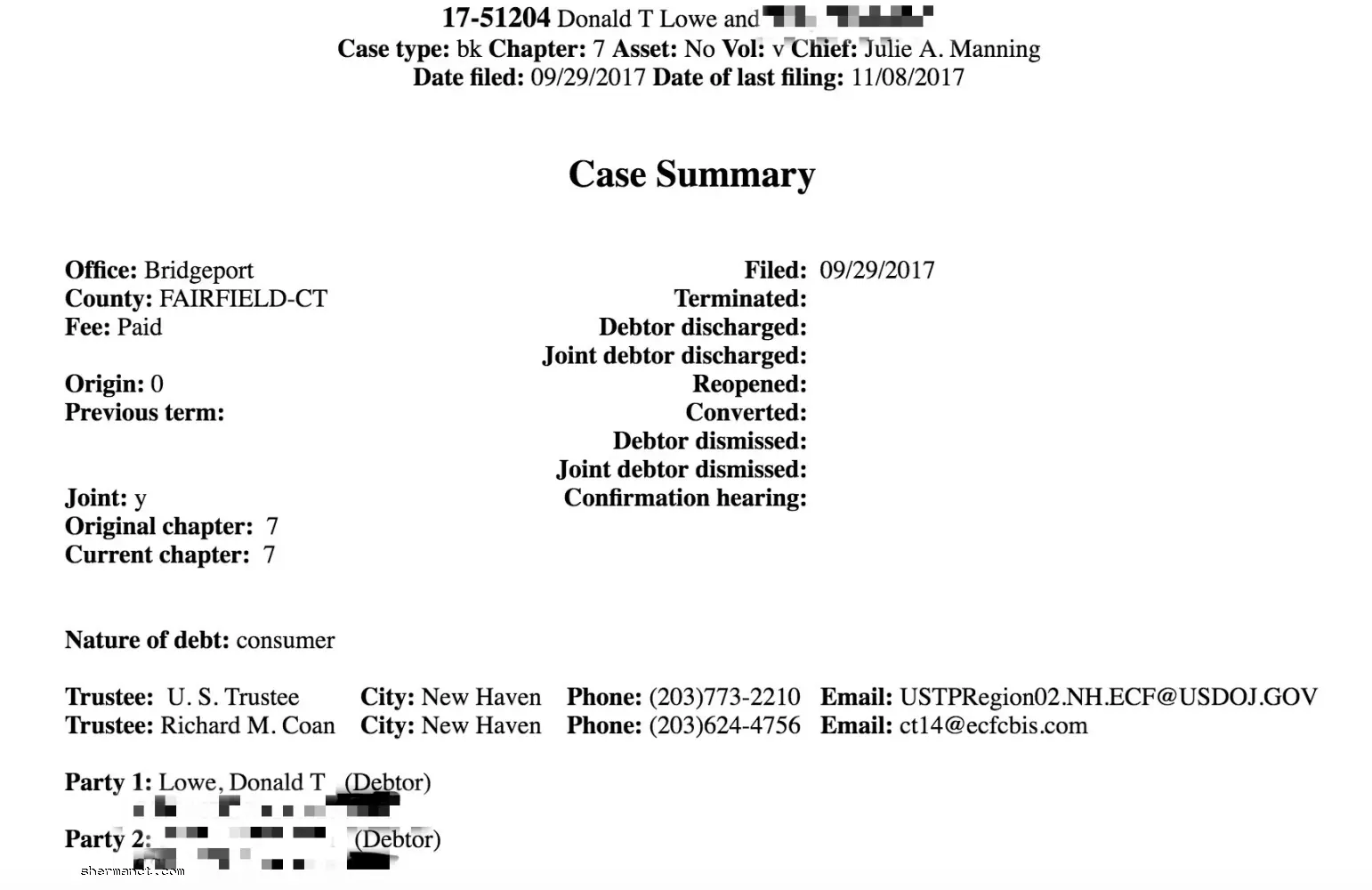
According to documents filed in the U.S. Bankruptcy Court (Case No. 17-51204), Donald T. Lowe filed for Chapter 7 Bankruptcy on September 29, 2017.
The proximity of this filing to his assumption of public office is stark:
- Sept 29, 2017: Lowe files for liquidation, declaring insolvency and an inability to manage personal debts.
- Nov 7, 2017: Just five weeks later, he is elected to manage Sherman’s multimillion-dollar municipal budget.
There is no record of this insolvency being disclosed to voters during the 2017 campaign. The candidate asked the town to trust him with its checkbook at the exact moment he was legally walking away from his own liabilities.
The Bill Comes Due
This history provides necessary context for the current state of the Town. A leader who could not manage a personal balance sheet is now overseeing a school project plagued by site constraints, ballooning budgets, and reactive decision-making.
The result is a town that runs on crisis management. We see it in the rising insurance rates. We see it in the tax hikes. And we see it in the tarps flapping in the wind, a symbol of an administration that attacks its critics to hide its own inability to plan.
The Ultimate Hypocrisy: The $563,677 Secret
While First Selectman Don Lowe has spent the last six years squeezing Sherman taxpayers to build a massive $5.5 million town surplus, federal court records reveal a stunning double standard regarding his own finances.
On September 29, 2017, just weeks before he was first elected to manage the town's multi-million dollar budget, Don Lowe filed for Chapter 7 bankruptcy. According to the federal petition (Case #17-51204), Lowe was drowning in $563,677.00 in total liabilities. The court labeled it a "No Asset" case, meaning his creditors, who he owed over $74,000 to in credit card debt alone, were left with absolutely nothing.
On January 10, 2018, right as he was settling into the First Selectman’s office, a federal judge legally wiped his financial slate clean. He was absolved of his financial collapse. Yet today, when the Sherman School needs basic repairs that the town can easily afford, Lowe refuses to offer the taxpayers the same grace. Instead, he and the Board of Education allowed the building to rot, forcing voters into a manufactured crisis to justify a $42.8 million blank check.
The First Selectman erased his debts, but he expects the taxpayers to pay for his legacy.
Editor's Note: This article is part of an ongoing series investigating fiscal transparency in Sherman. For details on the 2025 school budget vote, click here.
Support Independent Journalism
Investigative journalism and detailed municipal reporting require an immense amount of time and resources. From the initial background research and public records requests to the painstaking data illustration and editing, producing these articles is a full-time commitment. If you value this level of independent reporting, please consider supporting the effort. Whether it's a few bucks or a generous contribution, every donation helps keep this project running.