The Ultimate Wealth Filter
The Reality of Buying Real Estate in Sherman, Connecticut
D
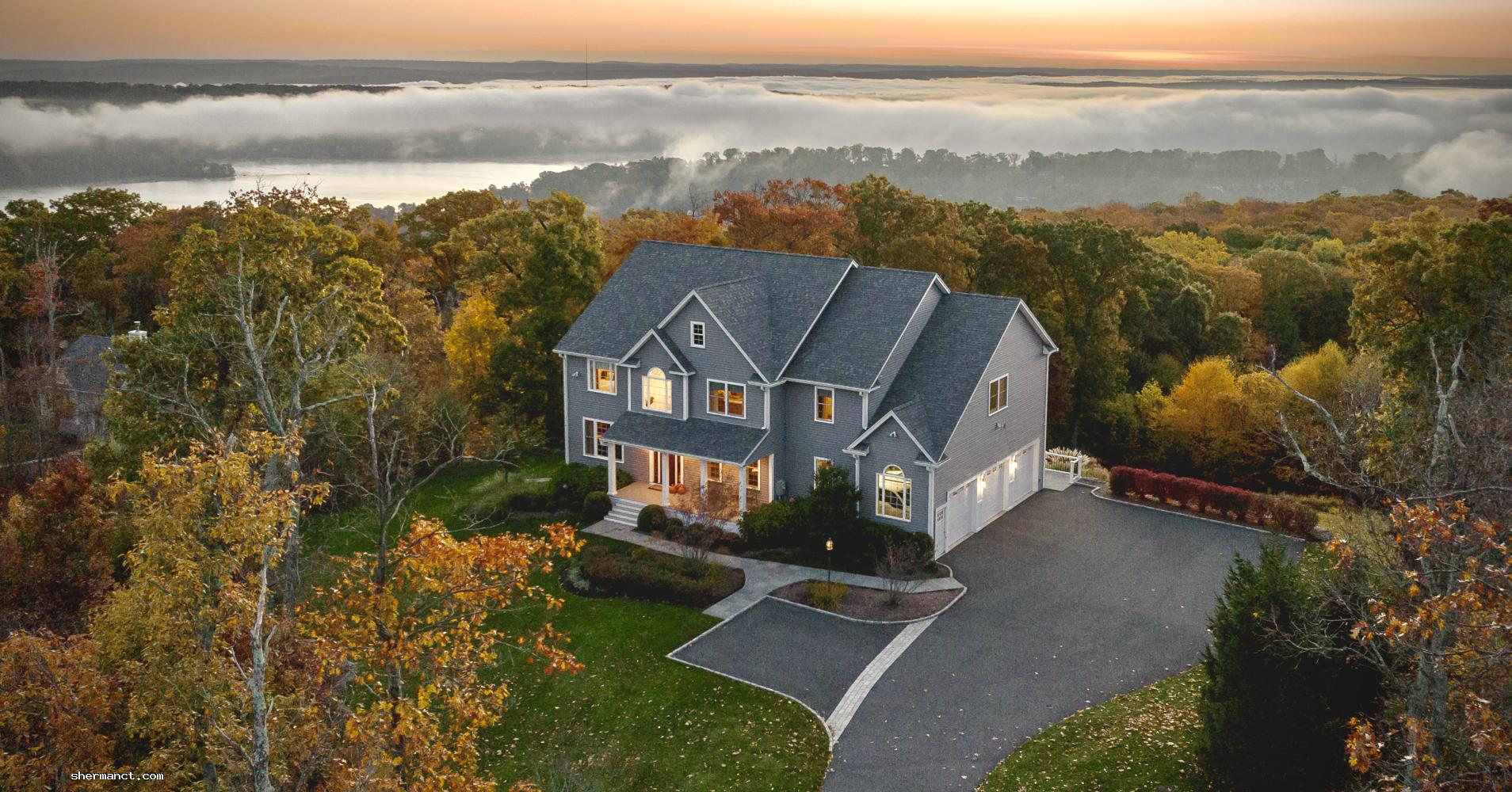
rive past the commercial sprawl of New Milford or the commuter lots of Brewster, New York, and the roads quickly narrow. The elevation climbs, the cell service routinely drops, and suddenly, you are enveloped in the deep, dripping green of the Connecticut woods.
You have crossed into Sherman.
With a population of fewer than 4,000 and a highly coveted "Rural Index of 2," Sherman is the ultimate geographic paradox. It feels like an isolated logging town in Vermont, yet it sits just 70 miles from Manhattan. For exhausted city dwellers and suburbanites looking to upgrade, it looks like a bucolic paradise. And as the spring real estate market heats up, buyers are circling the town's famously tight housing inventory, where a standard entry-level home currently commands $750,000 to $850,000, and lakefront estates easily shatter the seven-figure mark.
But to buy a house in this provincial New England hamlet is to buy into a fascinating, sometimes frictional, sociological experiment. Behind the stone walls and the well-equipped volunteer fire department lies a town defined by a strange, calculated preponderance of conservation, age demographics, real estate values, and local politics.

The Culture: An Insular Oasis by Design
Sherman’s identity is split down the middle. On one side are the weekenders—Manhattanites and Fairfield County executives who use the town as a quiet retreat. On the other side is the core: the full-time locals.
This dynamic breeds a deeply parochial atmosphere. The full-time residents love the town exactly the way it is, and they harbor a palpable, unspoken resistance to newcomers. There is a deeply ingrained cultural mandate here to protect the town’s rural character from the outside world.
This protectionism extends to the local economy. If you are looking for a bustling Main Street lined with artisanal coffee shops, boutique fitness studios, and wine bars, keep driving. Sherman has virtually no commercial footprint, and that is entirely by design. Commercial storefronts and business permits are fiercely restricted by the town. They do not want commercial traffic, they do not want strip malls, and they do not want tourists. You are expected to adapt to Sherman's quiet, not the other way around.
The Demographic Paradox: A Wealth Filter
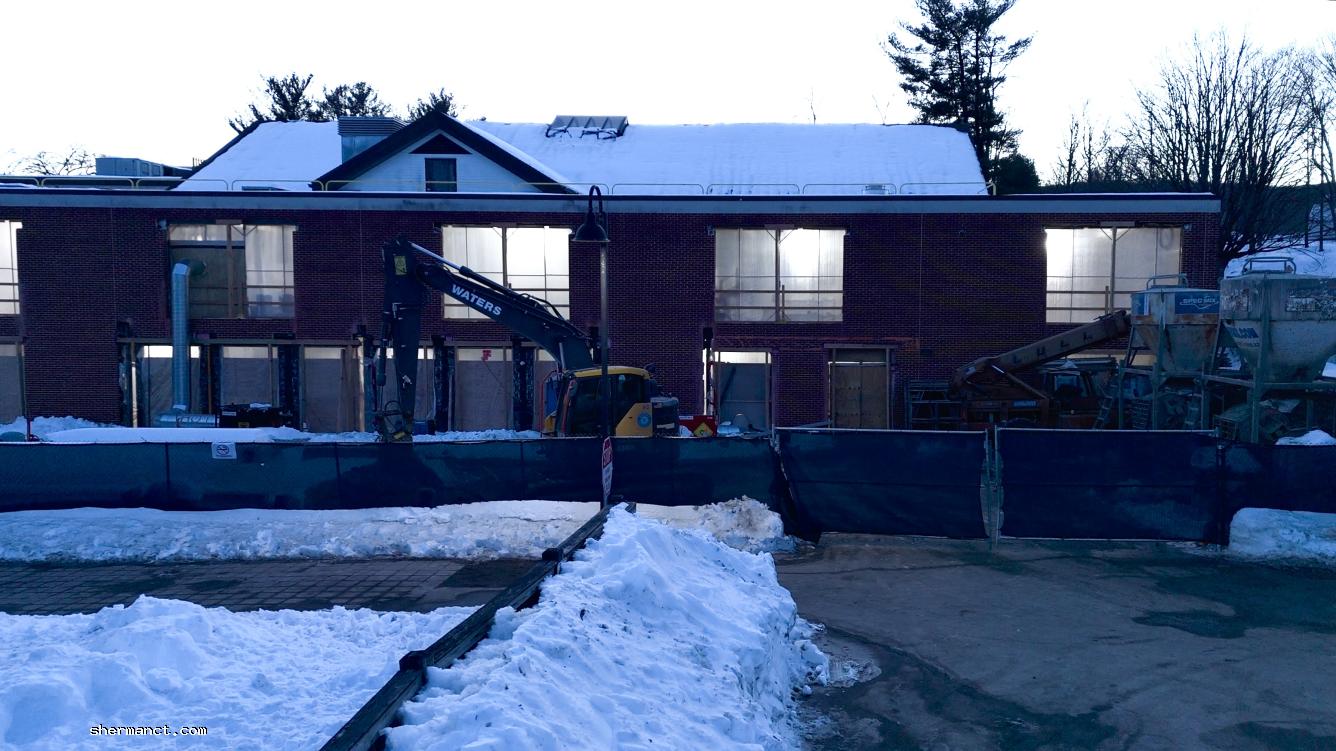
If a real estate agent is showing you a home in Sherman right now, they will likely whisper about the incredibly low taxes. They are probably hoping you don't read the local news, because those taxes are about to spike to pay for a $42.8 million "demolition by neglect" renovation at the local Pre-K through 8th Grade elementary school.

This reveals the town's most glaring contradiction. The median age of a Sherman resident hovers around 60 years old. It is a town of empty-nesters and retirees. Yet, their number one municipal asset—and their biggest financial sinkhole—is an elementary school. Why is an aging population taxing itself to the brink for a sprawling, ultra-modern grade school?
It is a calculated lure to attract young families. But there is a catch: because Sherman's anti-development zoning is so strict, the housing supply remains artificially constrained, keeping real estate prices exceptionally high. The town wants young families, but only a very specific kind. The high property values and the impending school tax hikes function as an economic filter, ensuring that the only young families who can afford to move here are highly affluent.
The School: High Scores, Low Diversity
For those wealthy families willing to stomach the impending tax hikes, the Sherman School functions almost like a publicly funded private school. While the Connecticut state average sees only 50% to 60% of students meeting math and reading proficiencies, Sherman boasts an 83% proficiency in math and 82% in reading.
But demographically, the school is a time capsule. In a rapidly diversifying state, the Sherman student body is 83.5% White, with less than 1% of the population identifying as Asian or Black. Economically, only 6.5% of students are eligible for free or reduced lunch (compared to a 44.8% state average). Furthermore, in a modern era of shifting gender identities, the district reports exactly 0.0% of its student body as non-binary. It is a high-performing, socio-economically insulated bubble.

The Environmental Hypocrisy: Lake vs. Dirt
The town's contradictions extend to its greatest natural resource: Candlewood Lake.
Buyers seeking a pristine, Walden-esque waterfront are in for a rude awakening. Candlewood is an engineered 1920s power reservoir that is frequently plagued by toxic blue-green algae (cyanobacteria) blooms. The dark secret of these blooms is the real estate itself. Highly coveted, grandfathered waterfront estates were built decades ago when environmental regulations were dangerously relaxed. Today, those aging septic systems sit far too close to the water, leaching nutrients directly into the lake, alongside municipal parking lot runoff.
To overcompensate for the environmental sins of the past, the town now brutally punishes the future. While the old homes pollute the lake, the current Sherman Sanitary Health Code makes breaking new ground an exotic bureaucratic nightmare.
The new regulations are arguably too tight. If you want to build near the water today, prepare for setbacks that defy logic: a massive 200 horizontal feet from Candlewood Lake. Before you can even pull a permit, you must dig 7-foot deep observation holes. If the soil percolation rate is slower than 1 inch in thirty minutes, your building dreams are dead. The irony is staggering: you can spend millions on an aging, grandfathered home that acts as an environmental hazard, but if you try to build a modern, ecologically clean home on an empty lot, the town will likely strangle the project in red tape.
The Reward: A Sanctuary in the Deep Green
So, with the climbing taxes, the strict commercial zoning, the algae, and the hypocritical soil requirements, why does the housing inventory remain so fiercely competitive?

Because when you finally navigate the bureaucracy and secure your piece of Sherman, the reward is utterly magnificent.
To live in Sherman is to inhabit the unmistakable charm of an undeveloped, traditional American town. It is steeped in a rural beauty that is rapidly vanishing everywhere else in the tri-state area. The topography is a rolling sea of green hills that explode into an unbelievable, cinematic tapestry of color every autumn.
Because commercial zoning is so restricted, the land is instead dotted with small, active agricultural and production farms. In the summer, the town comes alive with vibrant local farmers markets. You can take a slow drive down a winding backroad and find your neighbors offering fresh eggs from local chickens, left on a roadside stand with nothing but a wooden lockbox for the honor system. It is a place where tradition still holds real weight.
For a specific demographic of buyer, the appeal isn't just the acreage—it is the cultural moat. If you are looking to raise a family insulated from the shifting DEI mandates and the hyper-progressive, urban PC trends that make traditional culture revolt, Sherman offers a geographic time capsule.
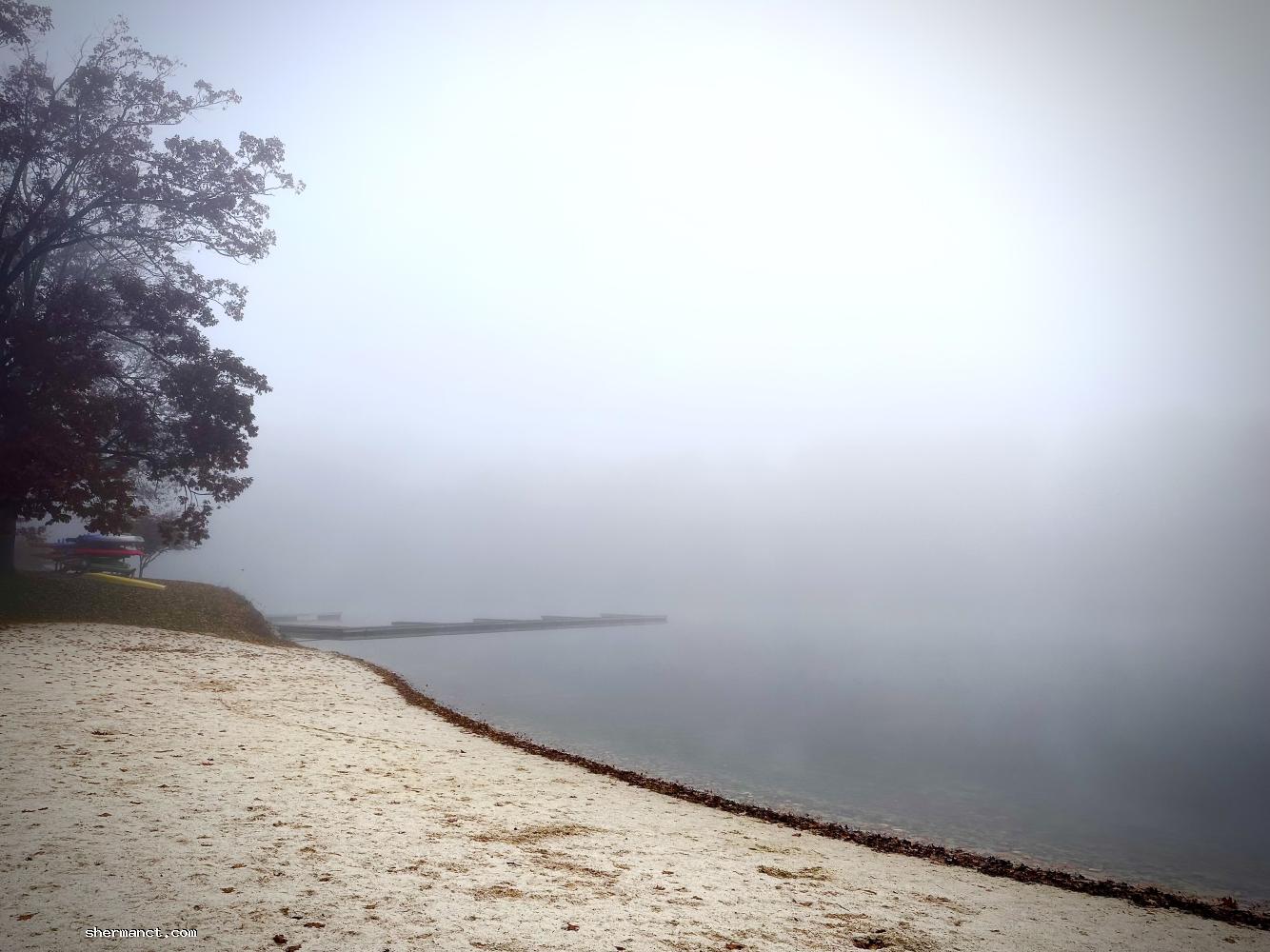
If you are looking to escape the relentless, exhausting hum of big-city life, this is your sanctuary. If your goal is to completely disconnect, to unplug your phone, and to safely revel in your own undiscovered antisocial disorder, there is no better refuge than Sherman. You don't come here to be seen. You come here to disappear into a good book by a wood-burning stove, listening to the rain hit a tin roof, surrounded by hundreds of acres of protected woods.
It takes work to get here, and it takes resilience to stay. But for those who value privacy over convenience, there is simply nowhere else like it.
Related Stories

The March Wall
While the deep freeze of January gets all the attention, late winter is actually the most psychologically taxing time of the year.

The Powerless Town Hall
Zoning loopholes, punted liability, and rogue contractors. Read the letters that prove nobody at Town Hall is actually managing the $42.8 million Sherman School project.
Demolition by Neglect
This is how Town Hall engineered the $42.8 million school crisis.