Let There Be Light: Architectural Splendor and Civic Irony in Sherman
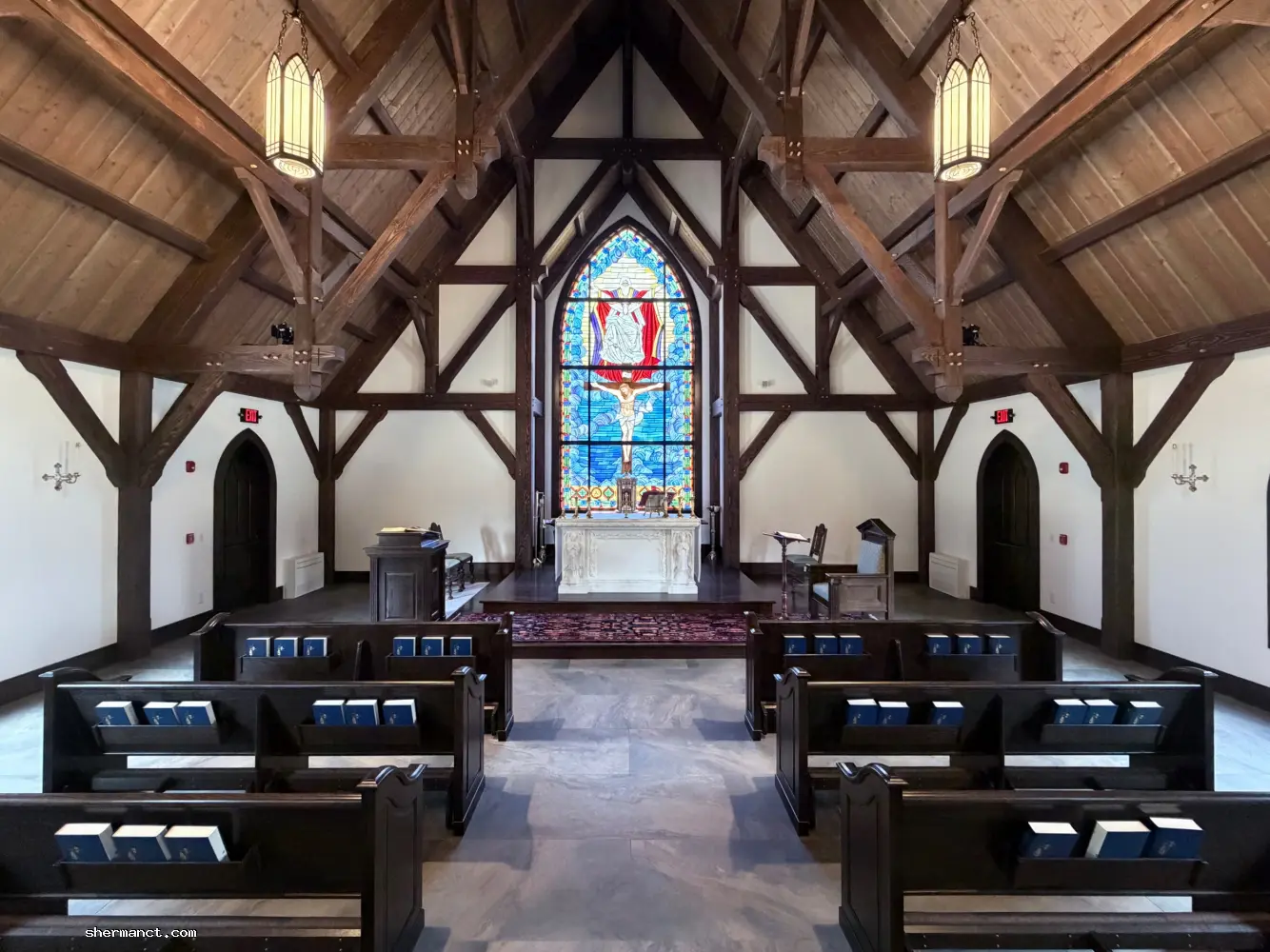
Crossing the threshold of the newly rebuilt Holy Trinity Chapel is to step into a space defined by traditional craftsmanship. Built with massive timber doors and dark mahogany pews, the chapel is a striking piece of contemporary ecclesiastical architecture. Its stained glass is spectacular, offering quiet serenity to anyone sitting within the nave.


It is a sanctuary designed for contemplation. Yet, in the deeply intertwined theater of small-town Connecticut politics, no structure exists in a vacuum. Buildings are inevitably drawn into the civic dialogue. Recently, this quiet sanctuary evolved into something else entirely: a glowing, incandescent monument to the selective enforcement of Sherman’s municipal government.
To grasp how a Catholic chapel became a symbol of political defiance, you first have to understand the commodity of darkness in Sherman.
The Commodity of Darkness
Sherman views its rural character as a fiercely protected heritage. The absence of commercial light pollution is a central tenet of the town’s social contract. Residents expect to see the Milky Way from their driveways, undisturbed by the amber glare of industrialized infrastructure.
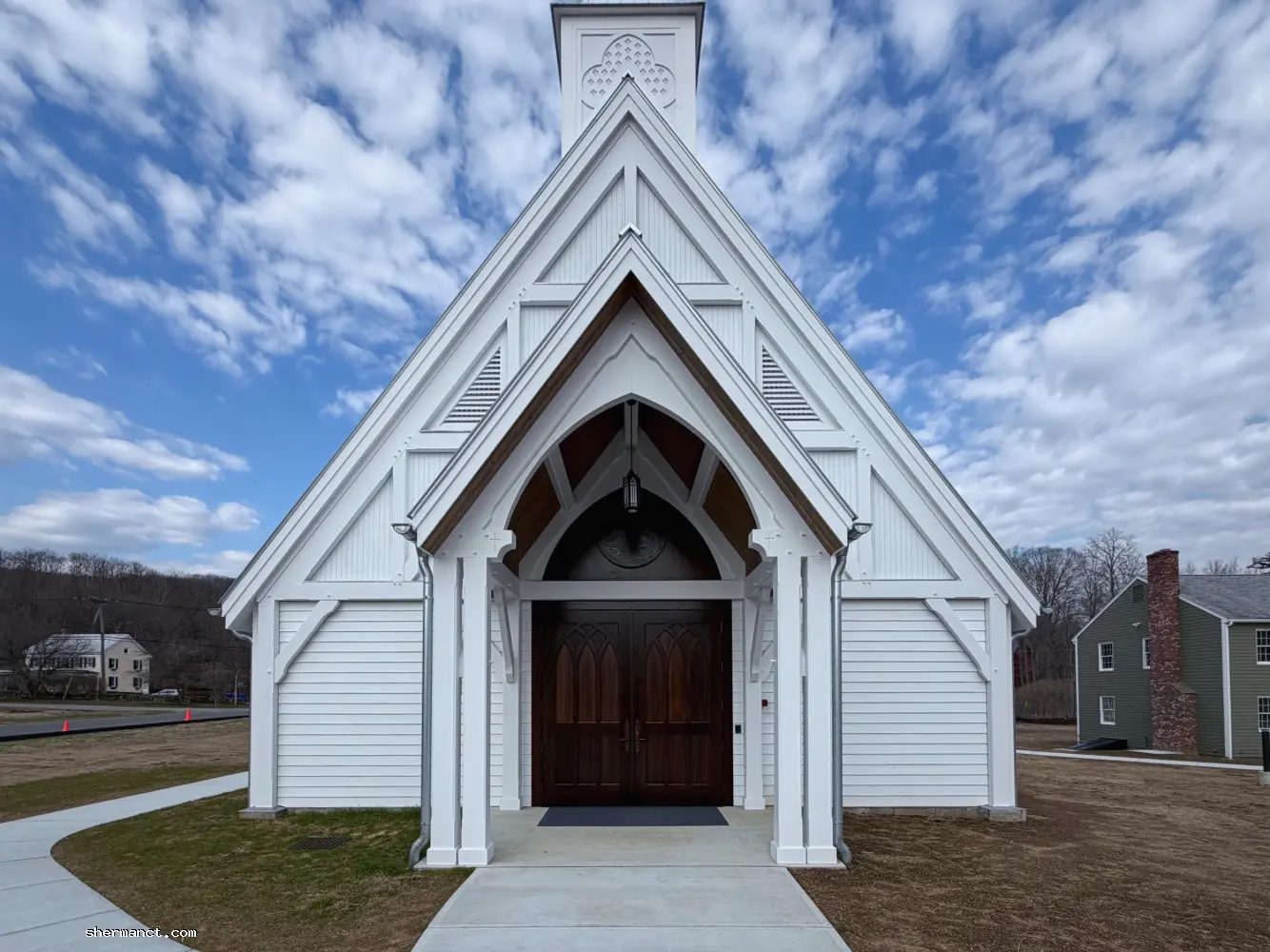
That darkness has recently been shattered. For months, residents have voiced mounting frustration over the blinding "light dome" radiating from the $50 million Sherman School renovation project. The taxpayer-funded construction site bathes its immediate neighbors in relentless, stadium-level illumination. It bleeds through bedroom windows and transforms the town center into something resembling an airport tarmac.
When citizens approached the municipal government seeking relief, they hit a bureaucratic stone wall. First Selectman Don Lowe was unequivocal: the town would not, and legally could not, do anything about the lights. The administration asserted that the school’s lighting fell safely outside the purview of local Planning and Zoning (P&Z) regulations. Because it was a municipal building, it operated in a gray area of immunity. The town government, essentially, had exempted itself from its own rules.
The Bureaucratic Double Standard
Yet, in Sherman, municipal rules seem to possess a fascinating elasticity. The law is a rigid, immovable object when applied to citizens, but a flexible suggestion when applied to the administration.
The depth of this double standard was laid bare during a recent conversation regarding the school’s light pollution. Selectman Joel Bruzinski, attempting to play the diplomat, validated the frustrations of the citizenry while simultaneously defending the administration's strict enforcement of zoning codes.
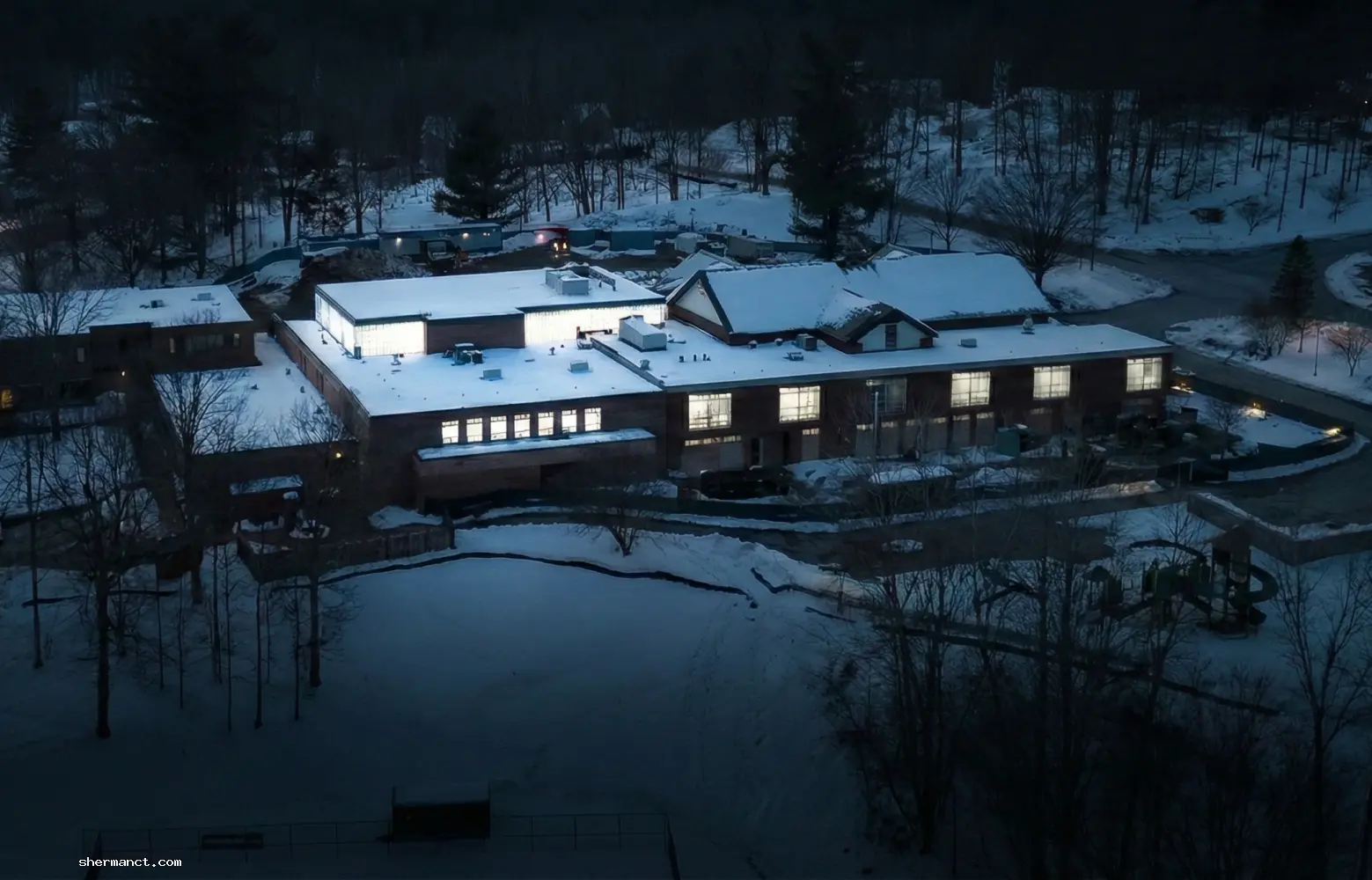
To prove his point, Bruzinski pointed just down the street. The town, he noted proudly, had recently fielded complaints from neighbors regarding the exterior spotlights illuminating the newly constructed Holy Trinity Chapel. The church, seeking to highlight its facade, had installed lighting that neighboring property owners found disruptive.
Faced with complaints against a private religious institution, the town did not feign helplessness. The municipal machinery engaged immediately. The church was approached, the specific Planning and Zoning ordinances regarding light trespass were cited, and the parish was officially ordered to shut their exterior floodlights down.
The irony is unavoidable: a municipal administration that throws its hands up in helpless defeat regarding its own glaring, $50 million megaproject somehow found the jurisdictional teeth to aggressively police the exterior lights of a local church.
The dichotomy is staggering. When faced with a $50 million municipal project causing town-wide distress, Town Hall claims complete impotence. But when a local parish turns on its exterior spotlights, the administration suddenly discovers its regulatory fangs. The message to taxpayers is clear: The government will relentlessly police your property, but you have no right to police theirs.
A Masterclass in Malicious Compliance
The administration, however, underestimated the quiet ingenuity of the chapel’s leadership. The church took meticulous notes on the town's highly selective interpretation of the zoning code. If the town wished to play a game of legal technicalities, the church was prepared to participate.
To understand the maneuver, you have to understand the letter of the law. Sherman's Planning and Zoning regulations dictate the wattage and downward angles of exterior property lighting to prevent light trespass. However, those same regulations hold zero jurisdiction over the interior of a building. The town has absolutely no legal mechanism to dictate what kind of lightbulb a private property owner screws into an interior socket. Furthermore, there is no ordinance mandating that a property owner must draw their window shades after dark.
Faced with the town's hypocritical enforcement, the church opted for malicious compliance. Dutifully, respectfully, and without a single public complaint, they turned off the illegal exterior floodlights. They complied with the exact letter of the municipal order.
Then, they walked inside the chapel.
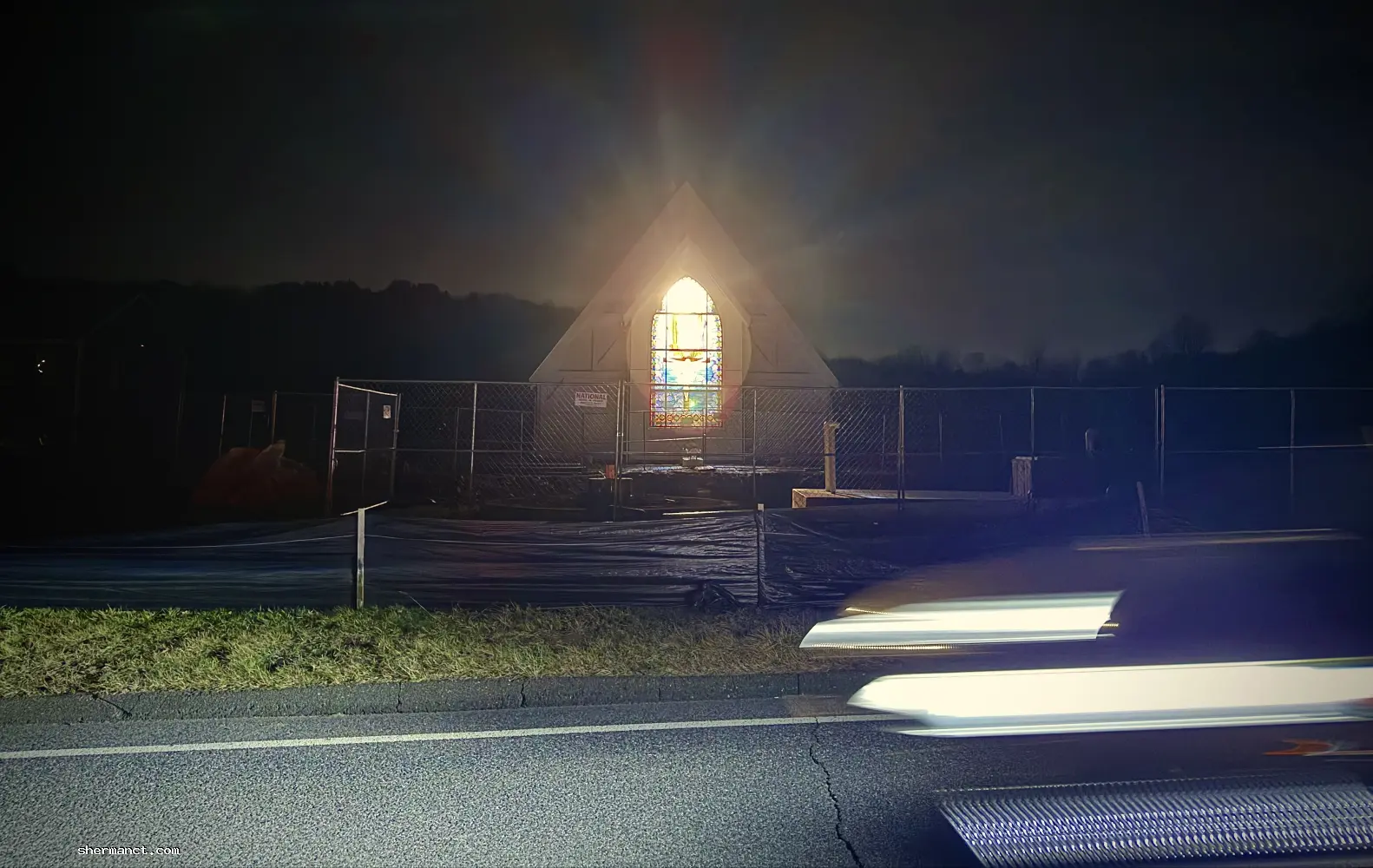
Within the sanctuary, the church positioned a massive light source in the middle of the nave and pointed it squarely out through their towering stained glass windows. Because the light originates from within the private, enclosed structure of the building, it falls entirely outside the purview of the Planning and Zoning Commission. The town had successfully ordered the church to turn off the spotlights illuminating the building; in response, the church turned the building itself into a spotlight.
The Erosion of Moral Authority
Today, the Holy Trinity Chapel serves as Sherman's second blinding light dome. It radiates street-side, transforming a quiet country church into a neon billboard of defiance.
If the school’s unrelenting industrial lights represent municipal overreach, the church’s brilliantly backlit stained glass represents a flawlessly executed lesson in civic misbehavior. It is a luminous standoff that speaks volumes about the current state of Sherman’s local government.
This situation is a highly visible metaphor for the erosion of a municipality's moral authority. The foundation of local government relies entirely on a delicate social contract: the belief that the rules apply equally to everyone.
When an administration tells a resident that the rules simply do not apply to the government’s own massive megaproject, the townspeople listen. When the social contract is broken by elected officials, residents realize that the regulations are merely suggestions. If the town will not police itself, the residents realize they owe the town no higher standard of compliance than the absolute, bare-minimum letter of the law.
By weaponizing its own stained glass, the church held an undeniable mirror up to Town Hall. They learned the administration's lesson well, and they applied it with devastating grace: the rules only apply when it is politically convenient, and loopholes are meant to be exploited.
The administration demanded compliance. The church delivered it, brilliantly illuminated for the entire town to see.
Support Independent Journalism
Investigative journalism and detailed municipal reporting require an immense amount of time and resources. From the initial background research and public records requests to the painstaking data illustration and editing, producing these articles is a full-time commitment. If you value this level of independent reporting, please consider supporting the effort. Whether it's a few bucks or a generous contribution, every donation helps keep this project running.