The Decay of Veterans Field
Overflowing Waste, Stagnant Lakes, and the Strange Administrative Neglect of a Civic Artery
There is a fundamental social contract inherent in the design and maintenance of a public park. When a municipality carves out a walking path, lays down the gravel, and invites the community to use it, they are making a quiet promise: We will keep this space safe, clean, and accessible. For years, the walking track at Veterans Field has stood as one of Sherman’s most quietly vital public assets. It is a town square in continuous motion, serving a highly specific and crucial demographic purpose.
In a town dominated by rugged, undulating woodland trails and dense, tick-infested underbrush, the flat, open expanse of the Veterans Field track provides a necessary sanctuary. It is here that our aging and elderly populations come to walk without the looming anxiety of hidden trip hazards or steep, unstable inclines. It is here that residents, highly attuned to the severe local risks of Lyme and Babesiosis, can exercise safely away from the tall grasses where the black-legged ticks wait. And, perhaps most visibly, it is here that hundreds of Sherman residents bring their canine companions for daily recreation.
During the harsh winter months, the track’s utility is magnified, offering one of the few cleared spaces for outdoor mobility. In the spring and summer, it transforms into a bustling artery of civic life. Yet, as the town steps into the warmer months of 2026, the residents who rely on this track are being met not with a well-maintained public asset, but with a grim, visceral display of administrative neglect.
The Overflowing Evidence
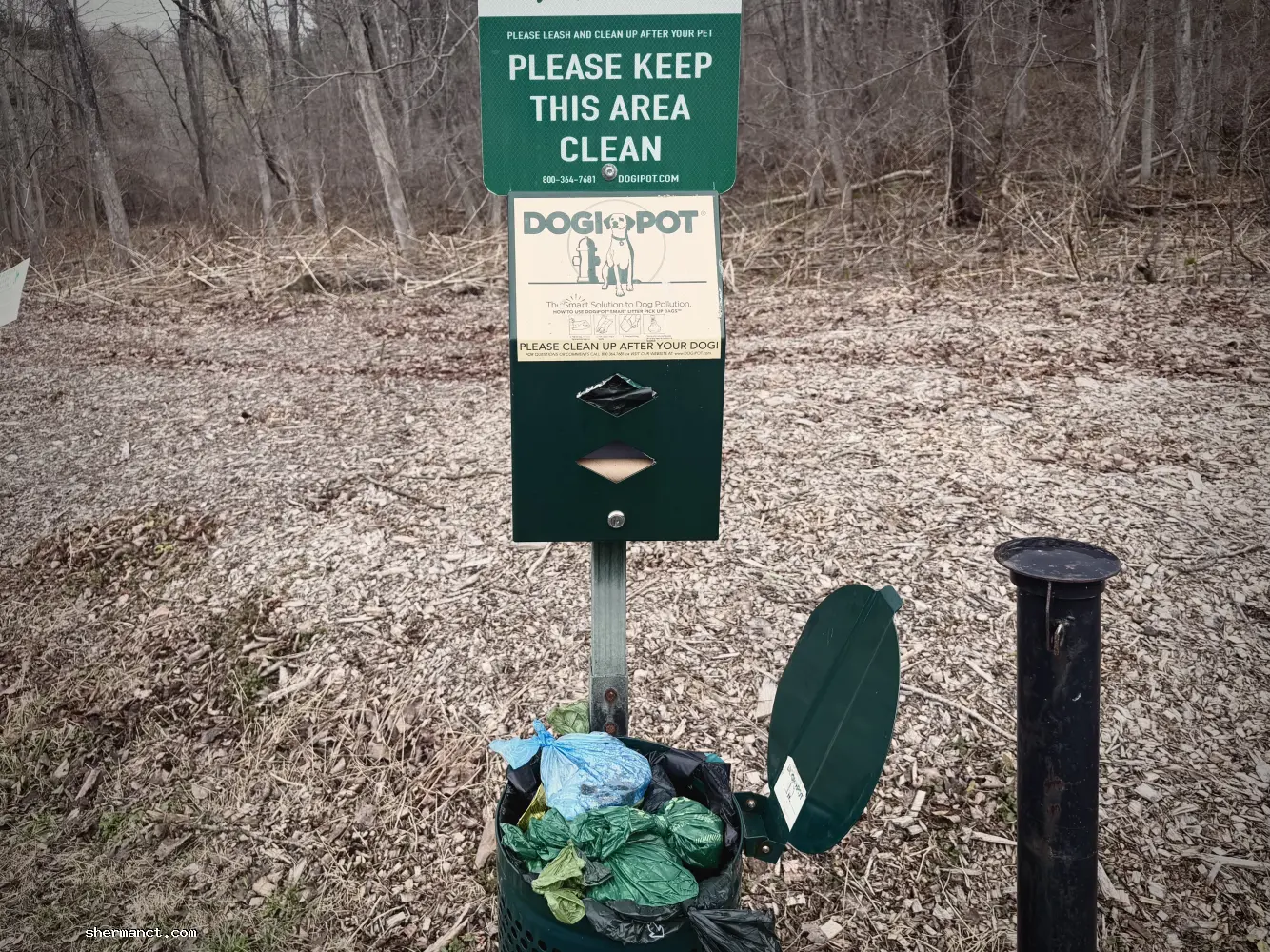
To understand the current state of municipal oversight in Sherman, one needs only to look at the green metal DOGIPOT stations stationed along the Veterans Field path. Above the receptacle, a bright green sign cheerfully mandates: "PLEASE KEEP THIS AREA CLEAN." Directly below that sign sits a reality that borders on the absurd.
For weeks, the waste collection bins have been stuffed beyond capacity. Brightly colored plastic bags of canine excrement are piled high, spilling over the rims and resting precariously against the open, hinged lids. Concurrently, the dispensers designed to provide fresh bags to responsible pet owners sit completely empty, hollowed out by a systemic failure to execute the most basic routine maintenance.
This is not the result of a missed afternoon shift or a sudden, unexpected influx of weekend hikers. When a waste bin in a primary town park sits overflowing for weeks on end, it transcends simple oversight. It becomes a statement of administrative priorities. Townspeople walking the track are increasingly forced to ask an uncomfortable question: Does the current administration simply not care about the residents who utilize this space? Is the leadership of Sherman fundamentally anti-dog, or are they merely apathetic to the sanitary conditions of the environments they are tasked with managing?
It is a frustrating paradox for the responsible citizens of Sherman. The residents are doing their part, they are bagging the waste, attempting to follow the town's ordinances, and seeking out the proper receptacles. The failure lies entirely at the top of the municipal chain of command, where the bureaucratic machinery seems incapable of directing a public works employee to empty a garbage can.
The Erosion of Safe Passage
While the overflowing waste bins present an immediate sanitary and aesthetic crisis, the physical degradation of the track itself reveals a much deeper, structural manifestation of neglect. Over the past several years, the walking path has fallen into a severe state of disrepair, brought on not merely by the unavoidable abuses of nature, but by the clumsy, heavy-handed actions of the town itself.
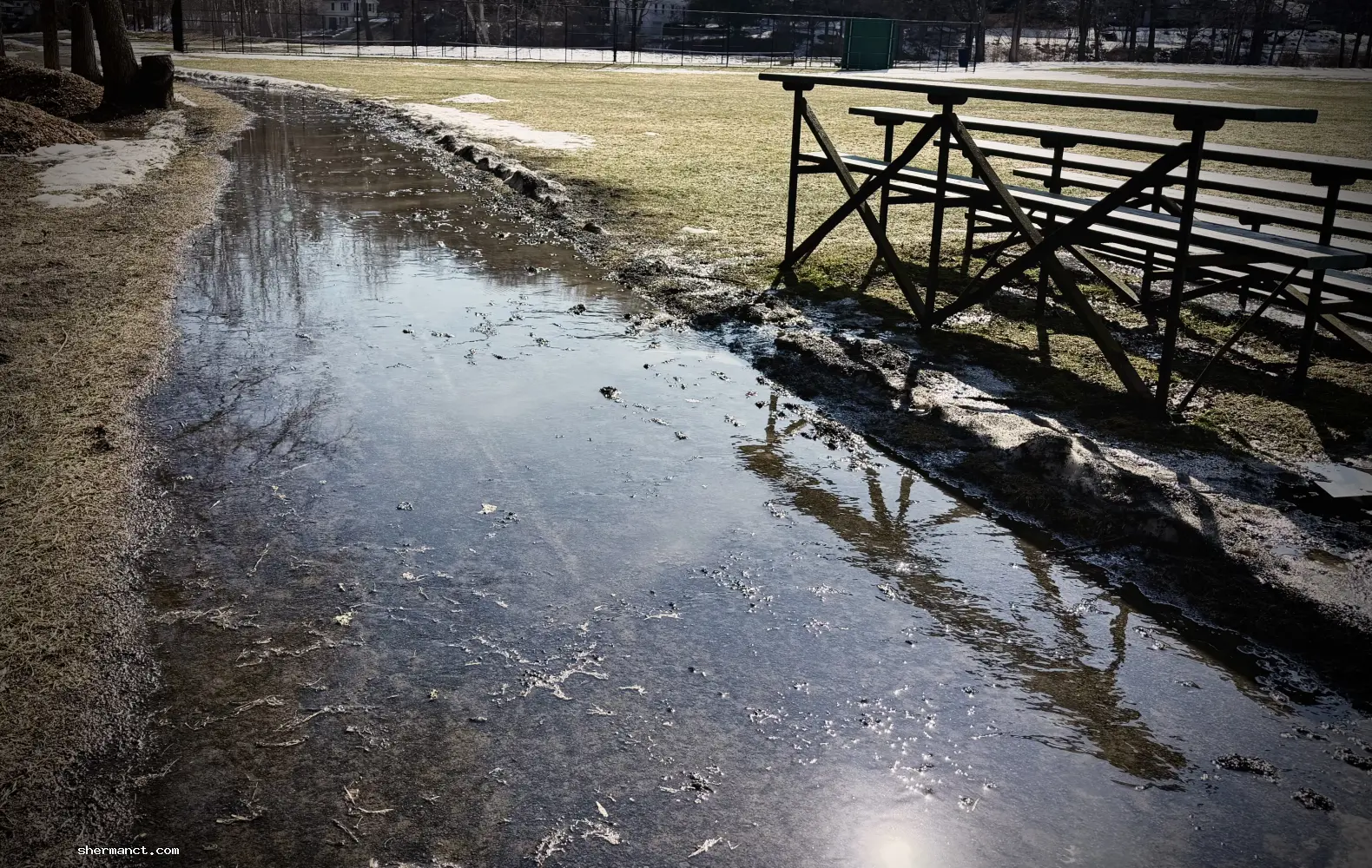
During the winter months, the effort to keep the path clear for residents was executed with a hasty, aggressive approach to plowing. Rather than delicately skimming the snow from the fragile surface, heavy plow blades were allowed to dig deeply into the earth. The resulting damage has been catastrophic for the track’s topography. Massive divots, gouges, and trenches have been carved into the once-flat path.
Now, with the arrival of spring rains and thawing ice, the consequences of this hasty maintenance are fully realized. Wide, expansive sections of the track no longer drain. Instead, they trap the precipitation, turning into deep, stagnant lakes that persist for days and sometimes weeks after a storm has passed.
The irony is bitter. A track that was specifically championed and utilized because it lacked trip hazards has been actively transformed by town maintenance vehicles into a treacherous obstacle course. Elderly residents, seeking a safe, flat surface to maintain their cardiovascular health, are now forced to navigate around icy, muddy basins, stepping off the path and into the exact tick-heavy, uneven terrain they came to Veterans Field to avoid.
A Microcosm of Administrative Failure
If we are to be entirely honest about the state of our municipality, the degradation of Veterans Field should not come as a surprise. It is, in fact, entirely consistent with the broader operational ethos of the Lowe administration.
In recent years, the town administration has repeatedly demonstrated a profound lack of care and a distinct lack of interest in the deep, unglamorous work of structural maintenance. We have watched this exact behavior play out on a much grander, far more devastating scale. If only we had recognized this proclivity for neglect earlier, we might have anticipated the catastrophic collapse of the Sherman School's infrastructure.
The overflowing trash cans and the flooded, gouged walking paths of Veterans Field are born of the exact same administrative DNA as the rotting K-Wing and the tarp-covered school roof. It is a philosophy of "Demolition by Neglect." It is the mathematical certainty of an administration that fundamentally misunderstands the concept of stewardship. Whether managing a $50 million municipal megaproject or a $50 metal garbage can, the outcome remains stubbornly the same: the asset is ignored until it fails, and the taxpayers are left to navigate the wreckage.
The Paradox of Optics
What makes the failure at Veterans Field particularly baffling, however, is that it directly contradicts the administration's usual survival strategy. Historically, the current leadership has operated on a platform of superficial optics. They are the architects of Sherman's "Potemkin Village", an administration that will eagerly prioritize the smooth, cosmetic paving of a beach parking lot over the invisible, structural integrity of a primary school.
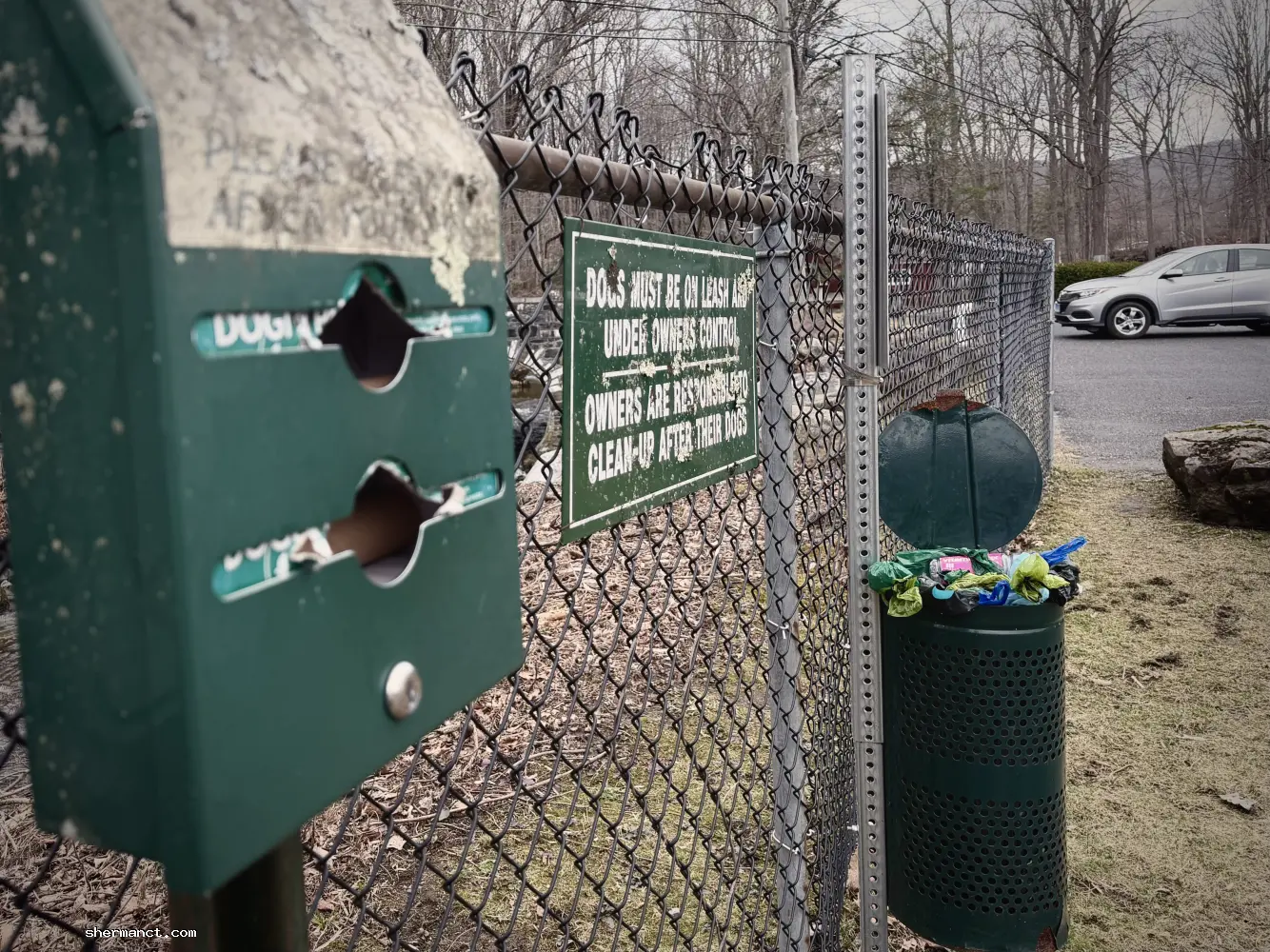
For an administration that so deeply craves the appearance of competence over the execution of deep, hard maintenance, maintaining a visual spectacle like Veterans Field should be an easy, political win. It requires minimal budget and minimal oversight to ensure a public park looks pristine. Emptying a bag dispenser and running a grader over a dirt track is the lowest-hanging fruit of municipal governance.
So, the lingering question remains: Why is the administration fumbling even this?
When a leadership team that relies entirely on cosmetic victories can no longer manage to execute even the simplest cosmetic maintenance, it signals a dangerous shift. It suggests that the bureaucratic inertia in Town Hall has reached a point of total paralysis. They are no longer just failing at the complex, multi-million-dollar tasks; they are now failing at the absolute baseline responsibilities of local government.
Veterans Field deserves better. The elderly residents who walk its path deserve a safe, unbroken surface. The dog owners who frequent its lawns deserve the basic sanitary infrastructure required to keep the space clean. But until the administration decides that routine maintenance is a requirement of their office rather than an optional suggestion, the lakes will continue to pool, the divots will deepen, and the waste will continue to rise.
Support Independent Journalism
Investigative journalism and detailed municipal reporting require an immense amount of time and resources. From the initial background research and public records requests to the painstaking data illustration and editing, producing these articles is a full-time commitment. If you value this level of independent reporting, please consider supporting the effort. Whether it's a few bucks or a generous contribution, every donation helps keep this project running.