Uncontained School Construction Runoff Discharges into Candlewood Lake Tributary
Photographic evidence shows muddy sediment flowing from municipal site near Veterans Field, raising questions over local Inland Wetlands enforcement standards.
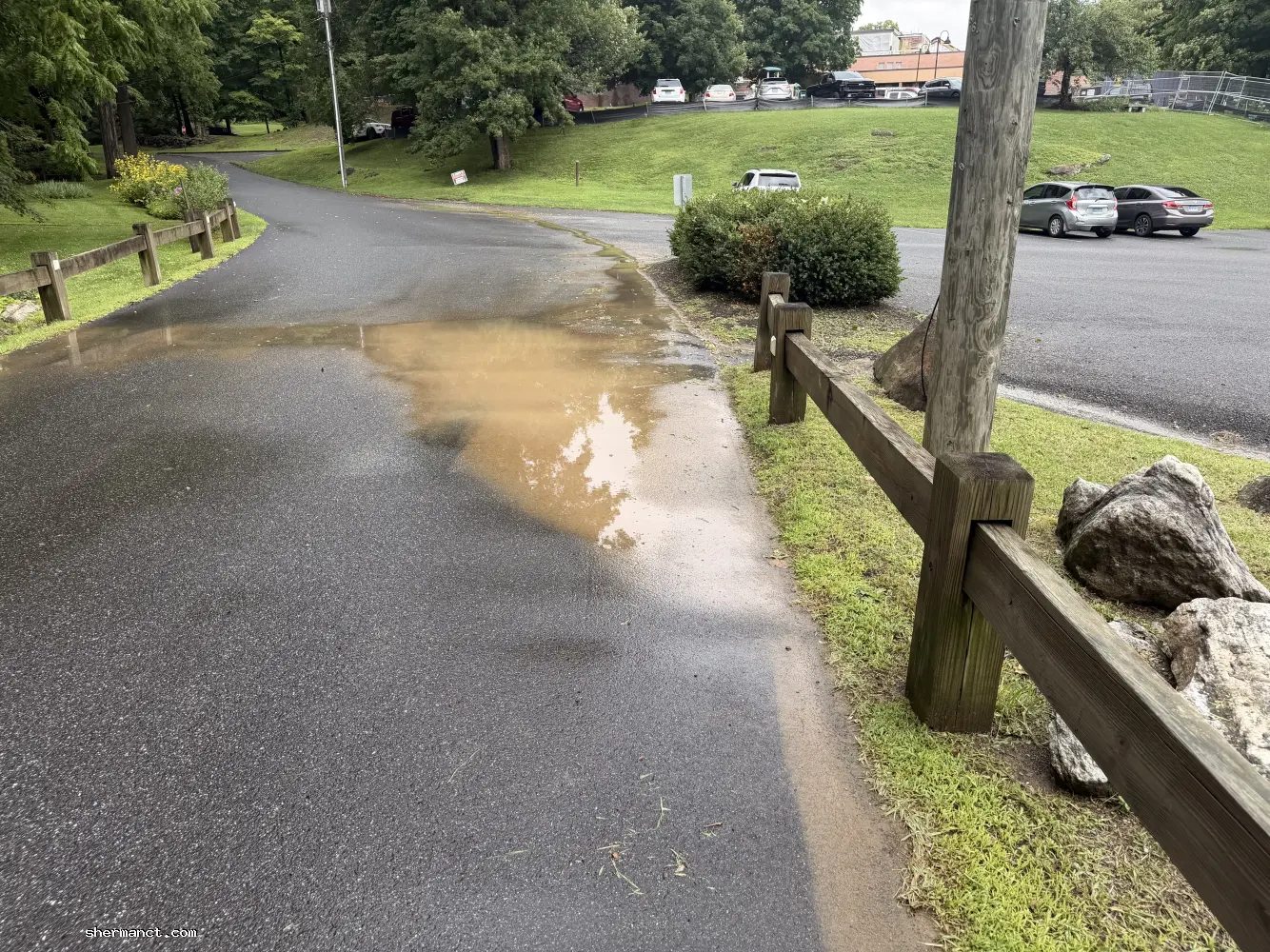
Following recent heavy rainfall, uncontrolled sediment and construction silt originating from Sherman’s $50 million municipal school construction project were documented discharging directly into a stream tributary that feeds Candlewood Lake.
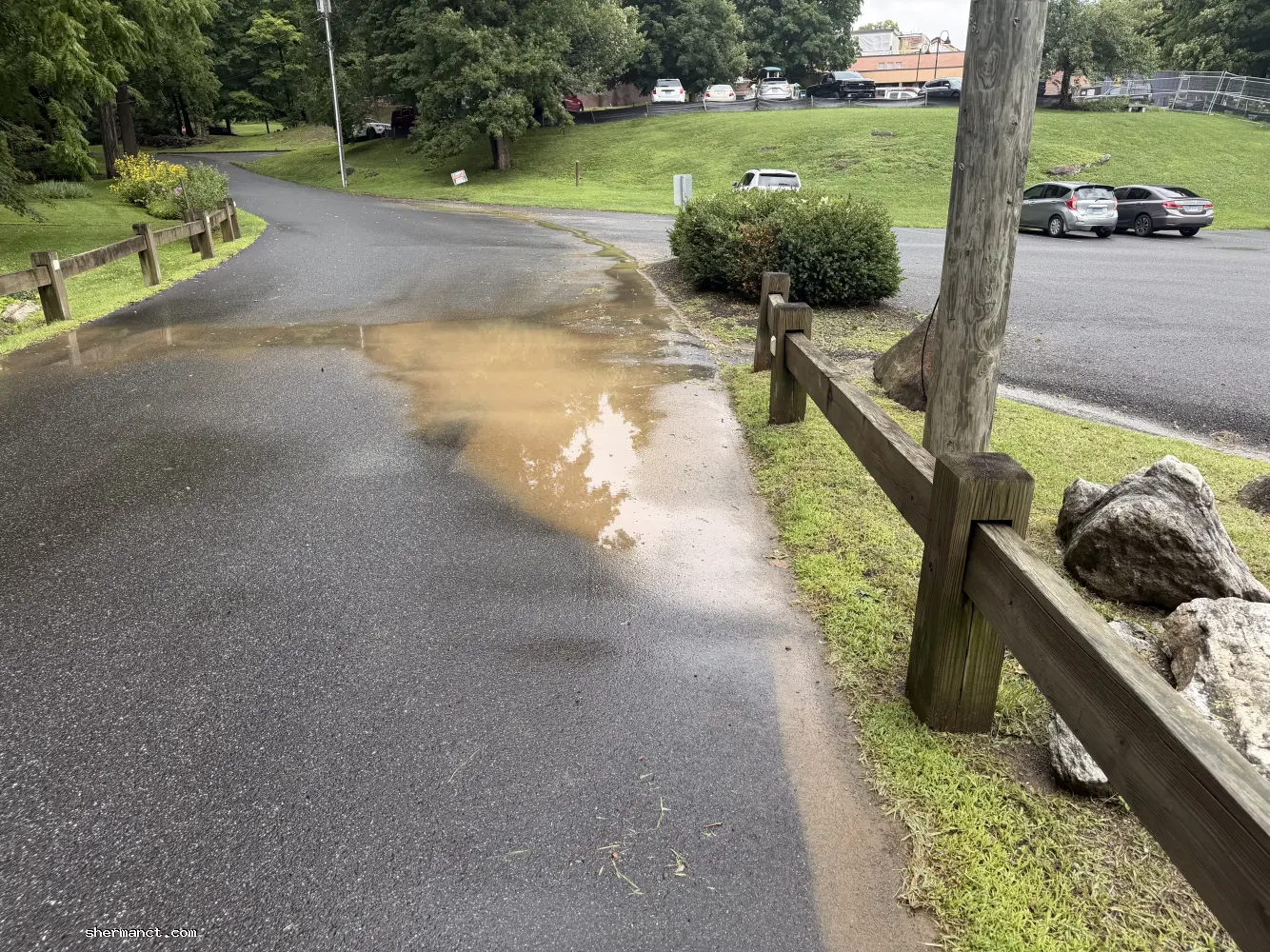
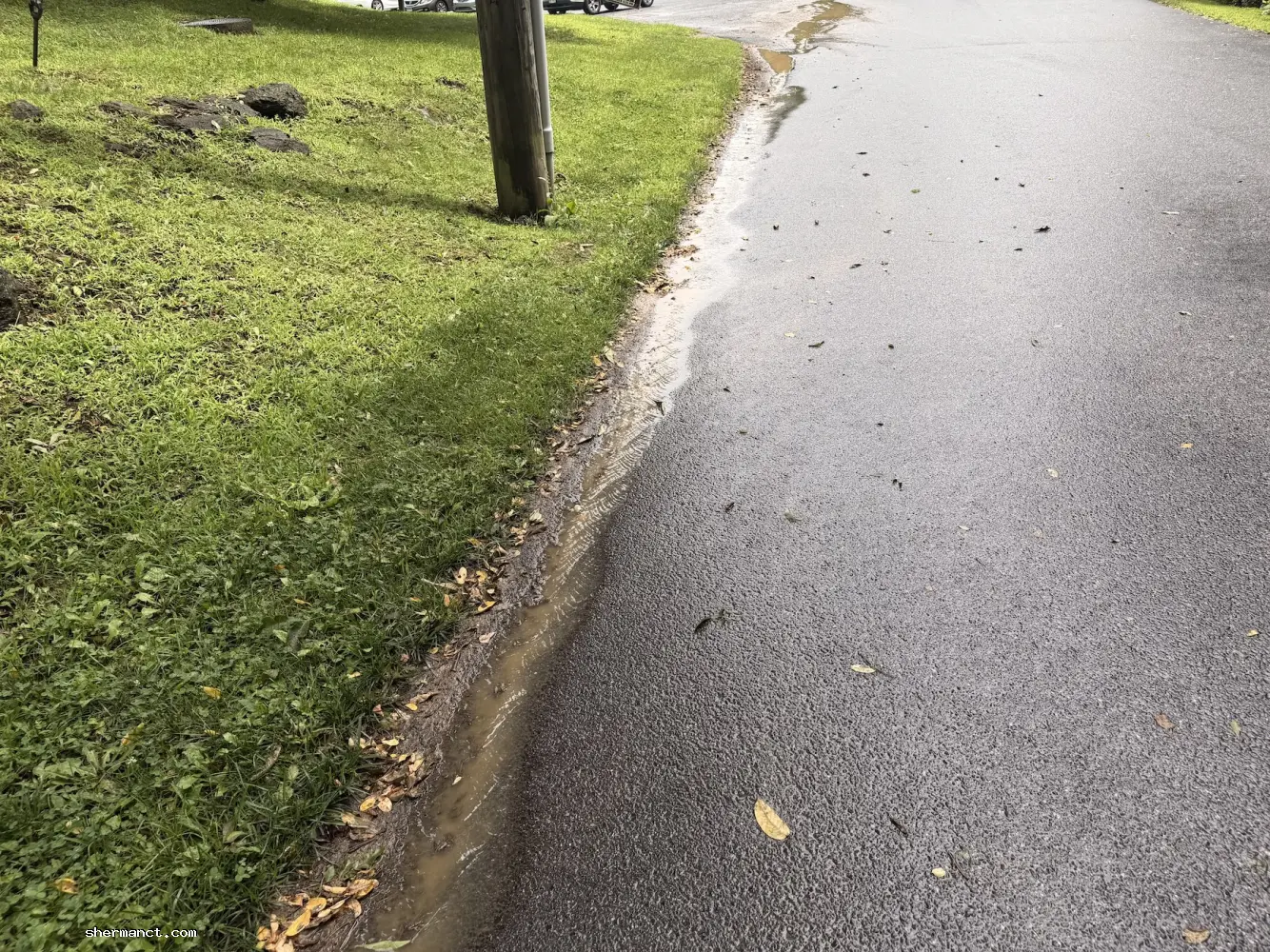
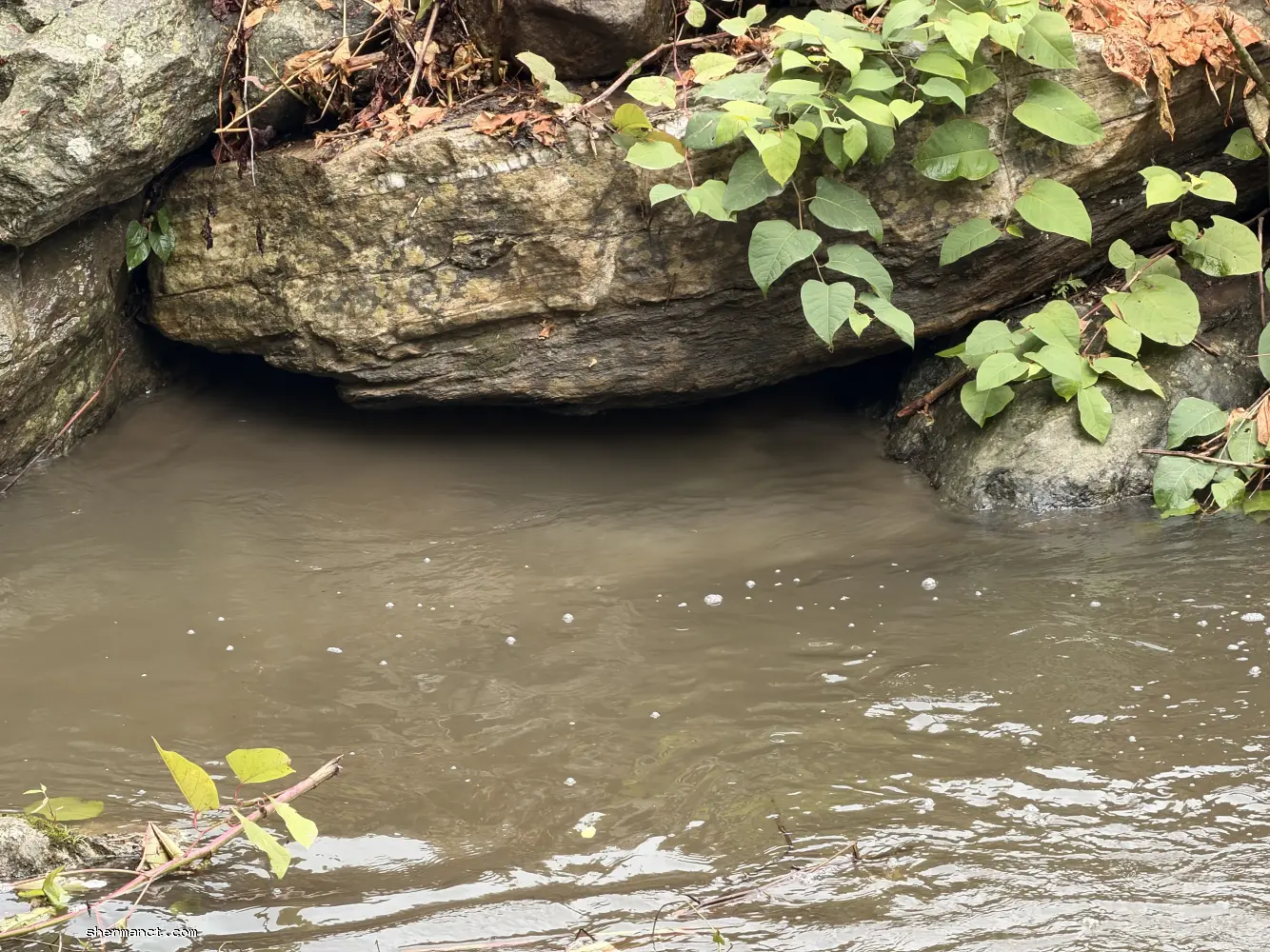
Photographs taken along Sawmill Road near the Veterans Field parking lot show stormwater runoff carrying thick brown silt off the construction parcel. The sediment-laden water traveled along the asphalt gutter line before flowing into an adjacent natural rock stream bed, visibly increasing the turbidity of the watercourse.
Regulatory Framework and Local Compliance Standards
Under Connecticut state statutes and local municipal regulations, any land disturbance activity near regulated wetlands or watercourses requires rigorous Soil Erosion and Sediment Control measures. In Sherman, private homeowners conducting earthwork near regulated buffers or within the Candlewood Lake 440-foot contour line are mandated by the Inland Wetlands Commission to install and maintain functioning silt fencing, hay bales, and runoff retention barriers prior to construction.
Failure by private property owners to contain sediment runoff typically results in formal stop-work orders, site inspections, and municipal fines designed to protect regional water quality. Environmental studies show that unmitigated siltation in freshwater streams degrades fish spawning habitats, damages aquatic vegetation, and accelerates nutrient accumulation in Candlewood Lake.
Discharge at the Municipal Site
The observed runoff near Veterans Field indicates that active containment barriers on the school site were either absent, improperly installed, or overwhelmed during the storm event. Despite visible plume formation where the runoff entered the tributary, no immediate remediation crews or municipal enforcement notices were posted at the site during the discharge.
The incident highlights an ongoing operational discrepancy between the strict regulatory enforcement applied to private residential projects and the oversight maintained on town-managed construction sites.
Support Independent Journalism
Investigative journalism and detailed municipal reporting require an immense amount of time and resources. From the initial background research and public records requests to the painstaking data illustration and editing, producing these articles is a full-time commitment. If you value this level of independent reporting, please consider supporting the effort. Whether it's a few bucks or a generous contribution, every donation helps keep this project running.